
Developer Finance Basics: What Lenders Expect and How to Set Your Project Up for Success
Development finance is a different conversation to residential or commercial lending. Whether you're subdividing land, delivering a luxury residential project, or exploring opportunities in regional markets, the way lenders assess a development proposal is more nuanced, more detailed, and more relationship-dependent than most borrowers expect.
And right now, the landscape is genuinely active. We're seeing strong developer enquiry across land subdivisions, high-end residential projects, and - notably - an uptick in regional development interest. At the same time, the NSW Government has introduced a significant new program that could meaningfully change how some projects secure construction finance.
But what are the foundations of development lending? What are lenders actually looking at, how are different project types treated, and what should you have in order before you approach the market?
How development finance works - and how it differs from other lending

Development finance is structured around project milestones, not just borrower income. Lenders are effectively underwriting a business plan - they want to understand the project from feasibility through to completion and sale (or hold),and assess whether the numbers stack up at every stage.
The core facility in most residential development projects is a construction loan, which draws down progressively as work is completed. This is different from a term loan - you're not drawing the full facility on day one, and the lender monitors progress throughout the build.
Key components lenders focus on include:
Loan-to-cost (LTC) and loan-to-value (LTV) ratios - most lenders will fund between 65%–80% of total development costs, depending on the project, the developer's track record, and the lender
Gross realisation value (GRV) - the estimated end value of the project once completed and sold; lenders typically lend up to 65%–70% of GRV
Interest coverage and project cashflow - how interest is serviced during construction, whether capitalised or paid as you go
Contingency provisions - most lenders require a minimum contingency (often 5%–10% of construction costs) built into the project budget
Pre-sales (where required) - more on this below
The overall position a lender wants to understand is: if something goes wrong mid-project, does this deal still make sense? That's the lens everything else is assessed through.
What lenders are looking for - the core assessment criteria

While each lender has its own appetite and credit settings, there are several common areas that will be assessed on any development application.
1. Developer track record
This is often the single most important factor - particularly for non-bank and private lenders. Lenders want to see that the developer and their delivery team have completed similar projects successfully. If you're stepping up in scale (from a duplex to a 20-lot subdivision, for example), be prepared to explain how your team fills any experience gaps.
First-time developers aren't automatically excluded, but they will face tighter terms, higher equity requirements, and often a smaller lender pool.
2. The feasibility - and the margins within it
Lenders will want to review a detailed feasibility study covering site acquisition costs, construction costs, professional fees, holding costs, sales and marketing costs, finance costs, and expected revenue. The margin matters. In general, lenders look for a project profit margin in the range of 15%–20%+ on costs - although this varies by project type and lender. Thin margins mean less tolerance for cost blowouts or sales delays.
3. Planning approvals and site readiness
Most lenders require development approval (DA) to be in place before they'll commit to funding. Some will lend for pre-DA costs or land acquisition with a condition that DA is obtained, but the further along the approvals process you are, the more lender choice you have. A project that has DA, a fixed-price building contract, and a clear construction timeline is in a far stronger position than one still working through council.
4. Pre-sales (for apartment and medium-density projects)
For multi-dwelling projects - particularly apartments and medium-density residential - many lenders require pre-sales to be in place before they'll release construction funding. The threshold has risen significantly in recent years, with some lenders now requiring pre-sales on 60%–80% of dwellings before approving funding, up from 50% in earlier market cycles.
Pre-sales give lenders confidence that there is real market demand for the product and that the developer can repay the facility on completion. They also reduce the lender's exposure to market risk.
Project types - how different development formats are assessed
Land subdivisions
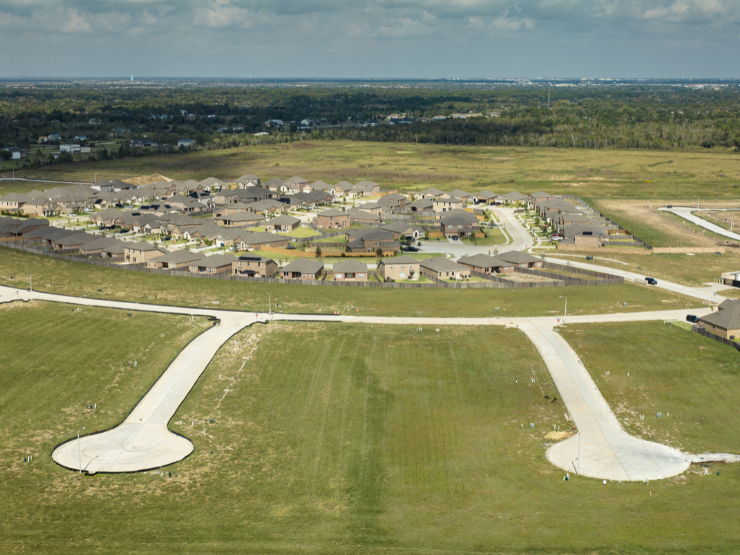
Subdivision finance covers the acquisition and development of land to create serviced lots for sale - whether that's a small Torrens-title subdivision or a larger greenfield or infill land release. Lenders assess the underlying land value, the cost and complexity of civil works, council and authority requirements, and the depth of demand for the finished lots in that location.
One consideration that's sometimes underestimated is the holding period. Subdivision projects can run for 12–36 months (or longer for larger sites), and interest and holding costs compound over that time. Getting the finance structure right from the start - including how interest is capitalised and when land sale proceeds release - is critical to the project's cashflow and viability.
Luxury residential development
High-end residential projects present a specific set of lending dynamics. The product quality and buyer profile can be compelling, but luxury property also attracts more conservative lender valuations - particularly in markets where comparable sales are limited - and slower absorption times at the top of the market can affect pre-sale thresholds and exit timelines.
For luxury developments, private credit and non-bank lenders are often a more natural fit. They bring flexibility, pricing that reflects the risk-reward profile of the project, and a willingness to look at the whole picture rather than applying a rigid credit matrix. The tradeoff is typically a higher interest rate - but for the right project, it's often the most efficient path to a funded deal.
If you're building in the luxury segment, your broker needs to understand both the product and the lender landscape well enough to position it correctly. That means knowing which lenders will genuinely engage with it and how to present the deal in a way that reflects its quality.
Regional development - a market worth paying attention to
We're currently seeing a genuine increase in developer interest in regional markets - and it's not hard to understand why. Land values are lower, competition can be less intense, and in many regions there is real, undersupplied demand for quality housing stock. Infrastructure investment and population growth in key regional centres is also making the numbers increasingly compelling.
That said, regional development does require careful navigation on the lending side. Not all lenders have the same appetite for regional locations - some will apply a postcode restriction or a lower LVR for non-metro projects. And valuation methodology in regional markets can be more variable, which affects what a lender will fund.
The key for regional projects is working with a broker who knows which lenders are genuinely active in that space - not just who will theoretically consider it, but who understands regional markets and will price and structure the deal accordingly.
NSW Pre-sale Finance Guarantee - a significant new program for eligible developers
One of the most meaningful recent policy developments for residential developers in NSW is the Pre-sale Finance Guarantee program, introduced by the NSW Government as part of the 2025–26 Budget. For eligible projects, it could materially change the path to construction funding.
In plain terms, this is how it works:
The NSW Government commits to purchasing off-the-plan dwellings in eligible residential developments - effectively acting as a government-backed pre-sale buyer to help satisfy lenders' pre-sale conditions
The program operates as a revolving fund, with up to $1 billion in pre-sale guarantees available at any one time over five years
Individual projects can receive between $5 million and $50 million in support, covering up to 50% of the dwellings in a single project
Eligible dwellings must be individually valued at up to $2 million
If dwellings remain unsold at completion, the Government can be called on to purchase them at a discounted rate (minimum 10% below independently assessed market value), and may retain them as affordable or social housing
Approved developers must be ready to commence construction within 6 months
The program targets a problem that has been well-documented in the NSW market: the number of pre-sales required to secure lender approval has increased significantly in recent years.
To be considered, developers need planning approval in place and must pass a government assessment of project credibility, capability, and delivery capacity - so it's not a blanket backstop, but rather a targeted support program for viable projects that are genuinely ready to build. You can find more information and submit an Expression of Interest via the NSW Planning website.
If you have a residential development in NSW that is approved and ready to proceed but has been held up by pre-sale requirements, this program is worth understanding in detail. It's a relatively new mechanism and navigating it alongside a standard construction finance application requires careful coordination - but for the right project, the impact could be significant.
Getting your project finance-ready - a practical overview

The earlier you engage a specialist broker on a development project, the more options you typically have. Lenders respond well to well-prepared submissions, and the way a deal is packaged and positioned can genuinely affect both the outcome and the terms.
In practical terms, a well-prepared development submission typically includes:
A detailed feasibility showing all costs, revenue assumptions, and margin
Evidence of planning approvals (or a clear timeline if DA is pending)
A fixed-price construction contract or at minimum a detailed cost plan from a quantity surveyor
Developer and key team CVs demonstrating relevant track record
Details of pre-sales secured (where applicable)
Entity and ownership structure documentation
Exit strategy - how and when the facility will be repaid (sales, refinance, hold)
Getting these materials in order before you start lender conversations puts you in a stronger negotiating position and reduces the risk of delays during credit assessment.
Choosing the right lender - banks vs non-banks vs private credit
Development finance is an area where lender selection matters as much as loan terms. The major banks offer the most competitive pricing but apply strict credit criteria - track record requirements, LVR caps, pre-sale thresholds, and a preference for projects in high-demand metropolitan locations.
Non-bank lenders and private credit providers sit in a different part of the market. They typically offer more flexibility on deal structure, faster credit decisions, and a willingness to look at projects the majors won't touch - including regional developments, smaller lot sizes, and luxury product. The tradeoff is pricing: rates are higher, and fees can be more significant.
For most development projects, the right answer is not simply the cheapest rate - it's the lender whose appetite, credit settings, and deal structure best fit the project. A lender who funds your deal cleanly at a higher rate is almost always better than a lower-rate approval that comes with conditions that create friction throughout the build.
The takeaway

Development finance rewards preparation, clear positioning, and the right lending relationships. Whether you're working through your first subdivision, scaling up a residential portfolio, delivering a luxury project, or exploring regional opportunities, the fundamentals are consistent: know your numbers, have your approvals in order, understand what lenders need to see, and work with people who know the market.
The difference between a funded deal and a stalled one is often less about the project itself and more about how well it's been prepared and presented.
The team at AAA Mortgages has deep experience in development finance across residential, luxury, subdivision, and regional projects - as well as commercial and complex briefs. With access to over 60 bank and non-bank lenders, we can assess your project, identify the right lender panel, and package your submission properly.
If you have a project in progress, or you're in the early planning stages and want to understand your options, get in touch for an obligation-free conversation.
Melissa Ashcroft
Important note
This is general information only, not personal financial, tax or legal advice.



Comments